


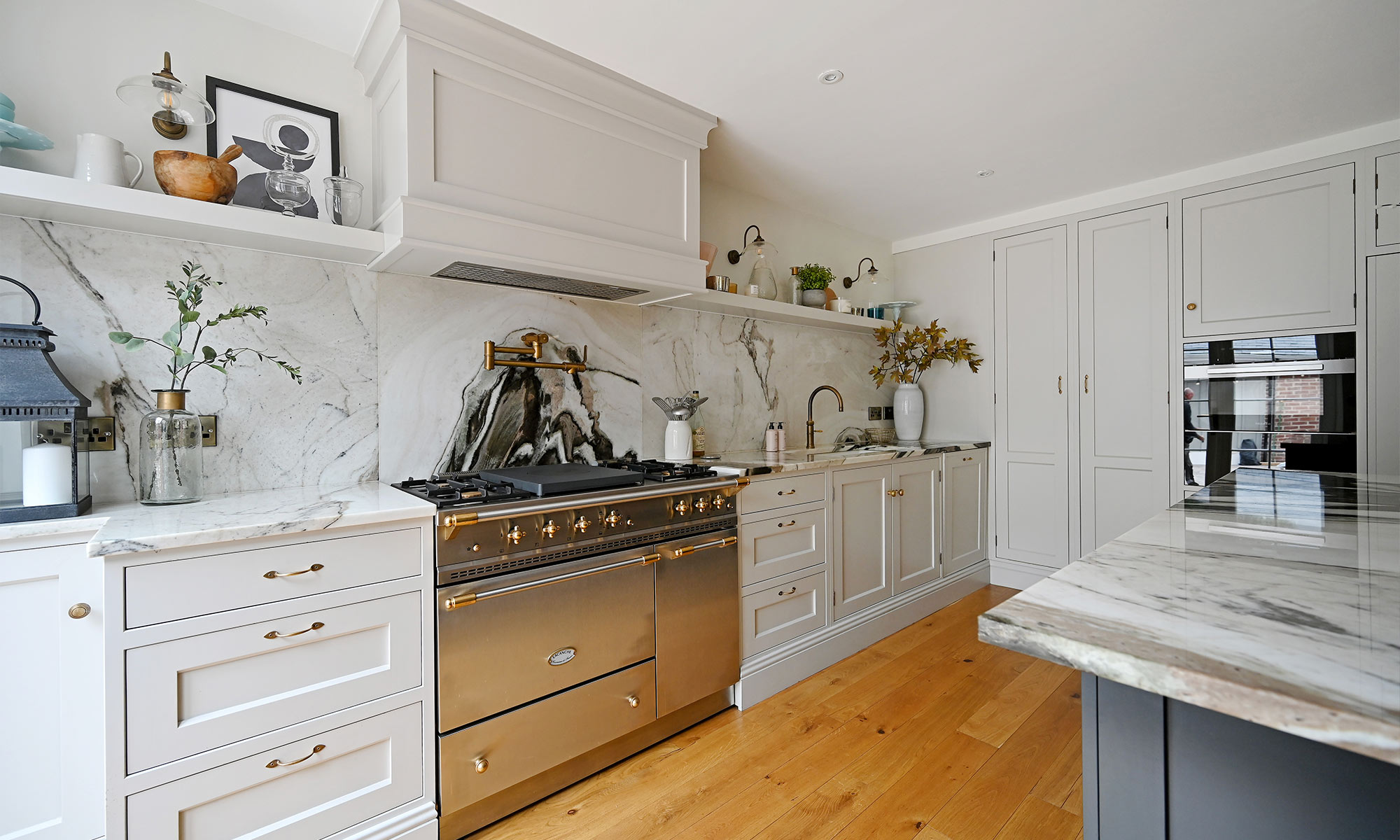
What is An English Kitchen?
When choosing the style of your new luxury kitchen, there are several options available, from the sleek minimalism of a modern German kitchen to more refined, culinary-focused Italian designs.
However, if you’re looking for something rich in character and charm, English kitchens offer an unmatched sense of craftsmanship and heritage.
Inspired by the classic country homes and cottages of rural England, traditional English kitchens combine warmth and style, making them equally suited to modern homes and period properties.
But what is an English kitchen, and why does it remain so popular today?
What defines an English kitchen?
An English kitchen is more than just a design trend; it’s a celebration of heritage and craftsmanship. Often defined by shaker-style cabinets, muted colour palettes and natural materials, these kitchens are inspired by the traditional country kitchens of rural England.
Where German kitchens usually focus on sleek minimalism and high-tech functionality, English kitchens are timeless and full of character, built around comfort, tactical finishes and subtle detailing.
 Key features of a traditional English kitchen
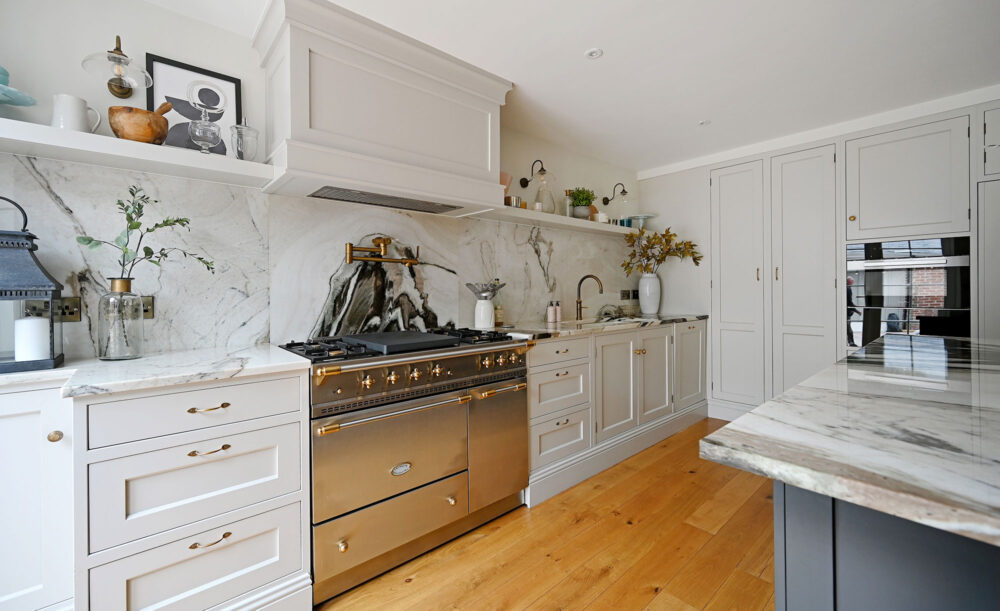 Key features of a traditional English kitchen
Shaker-style cabinets
The hallmark of English kitchens, these simple framed cabinet doors with subtle panelled detailing are classic, versatile, and perfect for hand-painted finishes.
Find out more about Shaker Kitchens in our guide: Shaker Kitchens – A Complete Guide.
Sinks
Deep ceramic Butler and Belfast sinks are iconic within English kitchen design. Functional yet beautiful, they showcase traditional craftsmanship while remaining practical for everyday family living.
Natural materials
Hand-painted cabinets, warm woods, and natural stone or wooden worktops bring texture and authenticity. These tactile materials not only add warmth but also age well over time.
Open Shelving
Open shelves or dresser-style units are a staple of traditional English kitchens, allowing crockery and cookware to be displayed rather than hidden away.
Country Charm
Additions such as vintage accessories, woven baskets, and farmhouse tables finish the space with an inviting, lived-in country feel.
Find out more about Country Kitchen design in our guide: Country Kitchen Design Ideas.
Why choose an English kitchen?
For those looking for a kitchen that combines beauty with authenticity, an English kitchen is the ideal choice. Its handcrafted construction guarantees durability and quality, and its adaptable design makes it suitable for any home.
The end result is a comfortable yet stylish space that works as both a culinary workspace and an entertaining spot, perfect for family life.
Creating a bespoke English kitchen
At Karl Benz Kitchens, we specialise in creating bespoke English kitchens handcrafted right here in Yorkshire. Our talented kitchen design team work closely with you to bring your vision to life.
If you’re considering a traditional English kitchen or exploring Shaker-style designs, visit our Sheffield kitchen showroom or get in touch today to get started.
FAQs
What is the difference between an English kitchen and a German kitchen?
English kitchens focus on warmth, craftsmanship, and traditional detailing, while German kitchens are known for sleek minimalism and high-tech precision. Both are luxury options, but the choice depends on whether you prefer character and charm or contemporary simplicity.
How much does an English kitchen cost?
A bespoke English kitchen is an investment in quality and longevity. Costs vary depending on materials, size, and customisation, but handcrafted designs like ours are built to last for decades, adding value to your home.
Do English kitchens work in modern homes?
Absolutely. While inspired by traditional country houses, English kitchens adapt beautifully to modern properties. By choosing contemporary finishes or pairing Shaker cabinetry with modern appliances, you can create a kitchen that feels timeless yet current.
What colours are popular for English kitchens?
Muted palettes, such as soft greys, creams, sage greens, and pale blues, are classic choices. These shades complement natural materials and suit both traditional and modern interiors.
