


The Craftsmanship Behind Bespoke English Kitchens Explained
There is a reason that bespoke English kitchens have maintained their reputation across generations while kitchen trends have come and gone. It is not nostalgia, and it is not simply a preference for a particular aesthetic. It is the recognition that a kitchen made by skilled hands, from materials chosen for their quality and longevity, and designed specifically for the space and the people who will use it, is a fundamentally different object from one that has been manufactured at scale and fitted to approximate dimensions.
Understanding what makes a bespoke English kitchen genuinely different, not just in appearance but in construction, material and process, helps to explain both the investment it requires and the value it delivers. This guide sets out the key elements of craftsmanship that define the category.
What Makes a Kitchen Truly Bespoke?
The word bespoke is used loosely in the kitchen industry, and it is worth being clear about what it means in its truest sense. A genuinely bespoke kitchen is one that has been designed from the ground up for a specific space, a specific brief and a specific client. Every dimension, every cabinet proportion, every material choice and every detail is determined by the project rather than selected from a pre-existing catalogue.
This is distinct from a semi-bespoke or made-to-measure kitchen, where standard unit sizes are modified to fit a space, and from a fully off-the-shelf kitchen, where standard units are arranged within a space regardless of whether they fit it well. The distinction matters because it determines whether the kitchen works with the architecture of a room or simply sits within it.
A truly bespoke English kitchen begins with the room: its proportions, its natural light, its existing architectural details, and the way it connects to the rest of the house. The design emerges from that understanding rather than being imposed upon it. At Karl Benz, our bespoke English kitchens are designed and fitted to exactly this standard for homes across Sheffield and the Peak District.
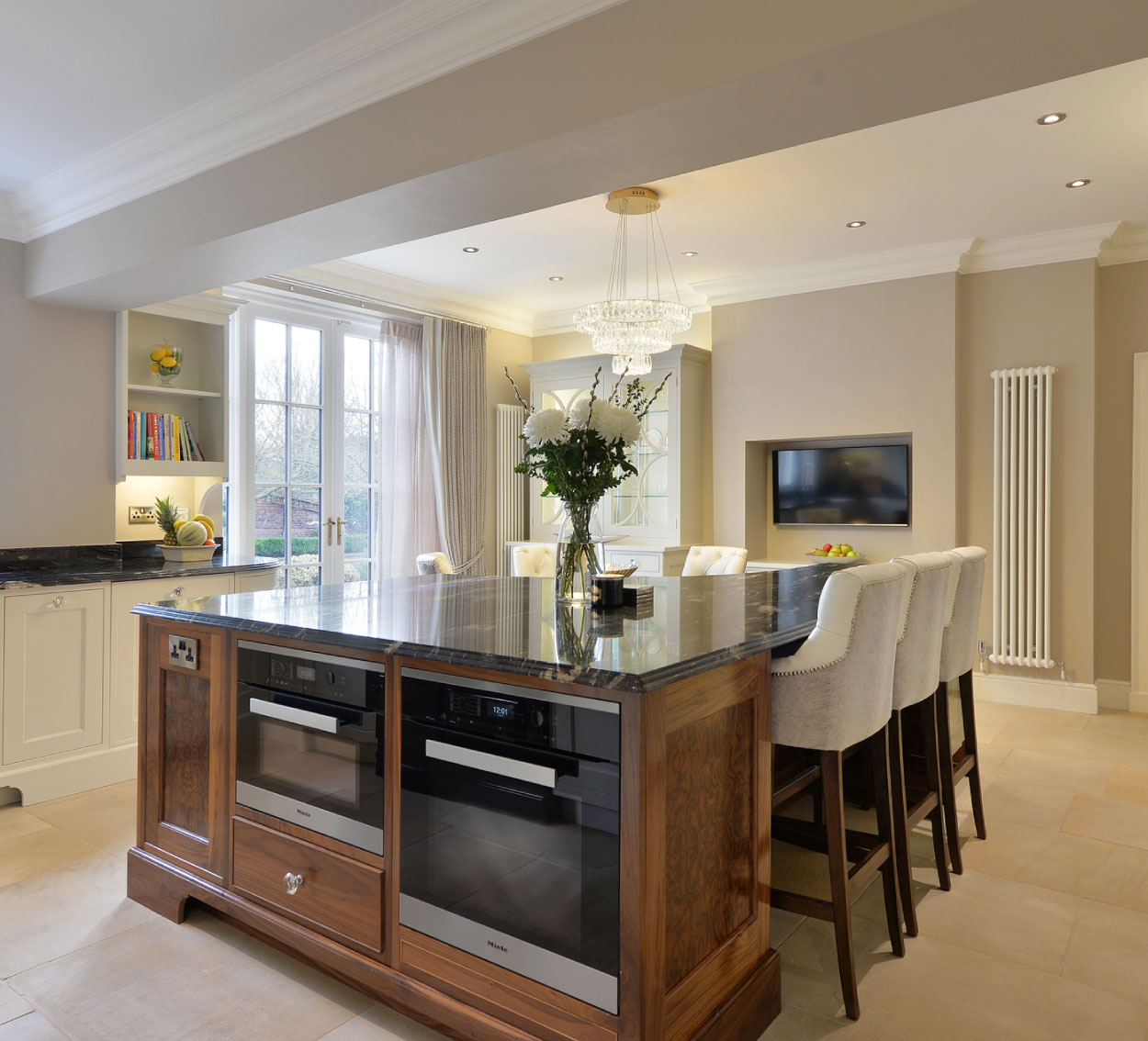
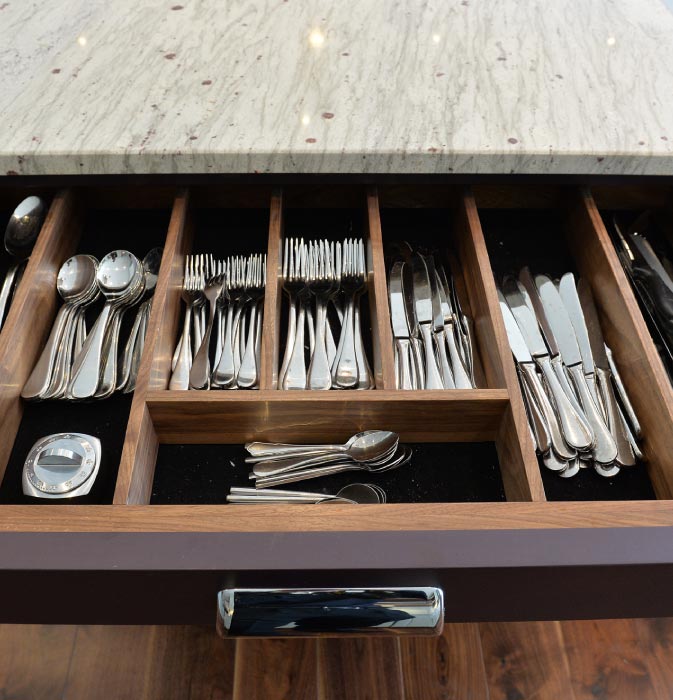
A true bespoke English kitchen is born in a workshop, not on an assembly line. Every cabinet is measured, cut, assembled and finished by skilled joiners who treat wood as a living material.
The Joinery: Where English Kitchen Craftsmanship Begins
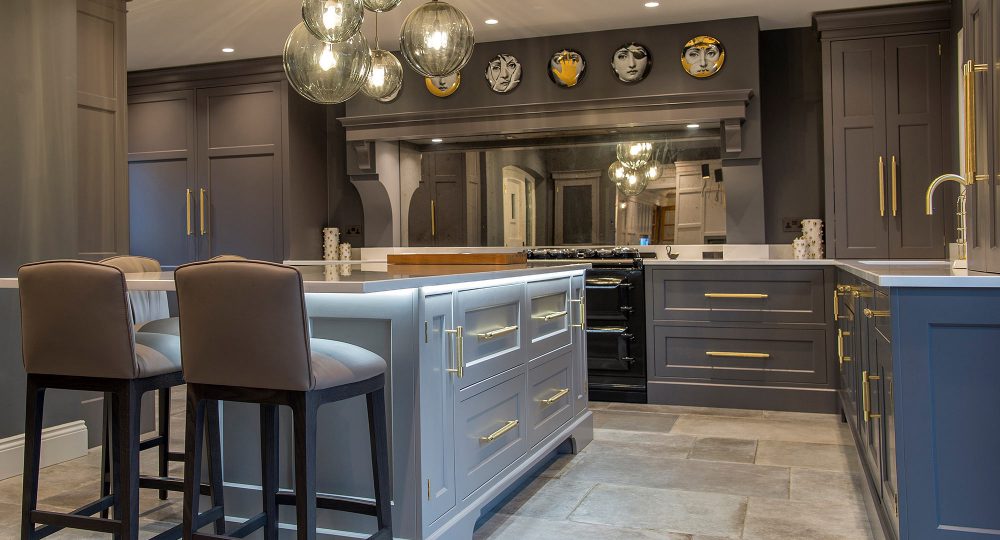
The cabinet carcass and door construction is where the quality of a bespoke English kitchen is most fundamentally determined, and where the difference between a handmade kitchen and a manufactured one is most clearly visible to anyone who knows what to look for.
In a genuinely handmade English kitchen, cabinet frames are constructed using traditional joinery techniques: mortise and tenon joints, dovetail construction, and solid wood components that are properly seasoned and prepared before use. These techniques produce a structure that is inherently stronger and more stable than one held together with modern adhesives and fasteners alone, and that ages with character rather than deteriorating over time.
Door construction is equally telling. The finest bespoke English kitchen doors are frame and panel construction, where a solid wood frame surrounds a floating panel that can expand and contract with changes in humidity without causing the door to warp or crack. This is a technique with centuries of precedent in English furniture making, and it remains the standard against which cabinet construction is measured in the finest kitchens.
The quality of the joinery is also what makes a bespoke kitchen repairable and adaptable over its lifetime. A well-made cabinet can be restored, refinished or modified decades after it was first installed. A poorly made one cannot.
Materials That Define the English Kitchen
Material selection is one of the most important decisions in a bespoke English kitchen, and one where the choices made at the outset determine both the character and the longevity of the finished result.
Solid hardwood is the defining material of the traditional English kitchen. Oak, ash, walnut and painted hardwoods each bring a different character to a space: oak with its pronounced grain and warm tones, ash with its lighter, more contemporary quality, walnut with its richness and depth. Each develops a patina with age and use that adds to its character rather than diminishing it, and each responds to the light in a room in a way that manufactured materials cannot replicate.
Worktop materials in the finest English kitchens are chosen with the same care. Solid timber worktops, natural stone, honed marble and engineered stone each have distinct properties in terms of durability, maintenance and appearance, and the right choice depends on how the kitchen will be used as much as on aesthetic preference. The best bespoke kitchen designers will guide clients through these choices with genuine knowledge rather than simply offering what is most convenient to source.
Painted kitchens, which are among the most enduring expressions of the English kitchen tradition, typically use solid hardwood painted in a carefully chosen colour. The quality of the paint finish, and the preparation that precedes it, has a significant effect on the result.
Hand-Painted Finishes and the Art of Colour
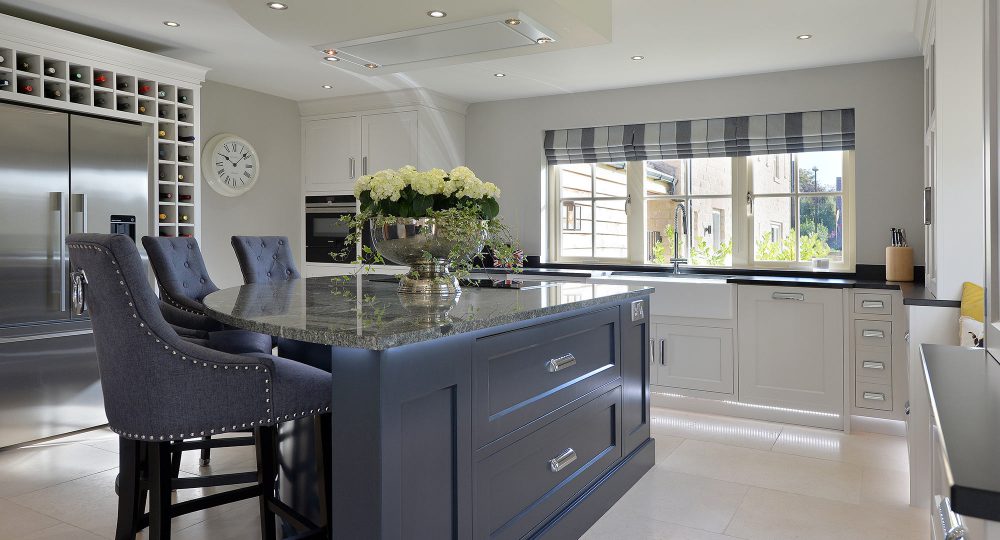
Colour is one of the most characterful elements of a bespoke English kitchen, and hand-painted finishes are the traditional means by which it is applied. A properly hand-painted kitchen door has a quality of surface that factory-sprayed finishes do not: a slight depth and variation that catches the light differently at different times of day, and that improves with age as the paint develops its own character.
The preparation before painting is as important as the painting itself. Surfaces must be properly primed, sanded between coats, and finished to a standard that will hold up to the daily wear that a kitchen receives. The best painted kitchens are finished to a standard that allows them to be touched up and repainted in place if needed, without the need to remove and replace cabinetry.
Colour choice in a bespoke English kitchen is typically made in close collaboration between the designer and the client, with an understanding of how natural light, flooring, worktop materials and adjacent spaces all affect how a colour reads in a room. The palette associated with English kitchens, soft whites, warm greys, muted greens, deep blues and earthy neutrals, reflects a tradition of using colour with restraint and confidence rather than following trend.
Hardware and Detail: The Finishing Touches That Matter
In a bespoke English kitchen, the hardware is not an afterthought. Handles, hinges, knobs, tap fittings and other metalwork are chosen as part of a considered whole, and their quality is immediately apparent in daily use.
Solid brass, aged bronze, pewter and hand-forged iron are the traditional hardware materials of the English kitchen, and each develops a patina over time that adds to rather than detracts from its character. The weight and action of a well-made hinge or a solid brass handle is one of the small, daily pleasures of a kitchen that has been properly made, and one of the details that most clearly distinguishes a bespoke kitchen from a manufactured one.
Architectural details, cornices, plinths, pilasters, glazed cabinet doors, open shelving and furniture legs, are the elements that give a bespoke English kitchen its connection to the broader tradition of English joinery and interior design. These details are proportioned specifically for each project rather than applied as standard additions, and their relationship to the room they inhabit is what gives the finest bespoke kitchens their sense of inevitability: the feeling that the kitchen has always belonged in the space.
Bespoke English Kitchens vs Off-the-Shelf: What You Are Actually Paying For
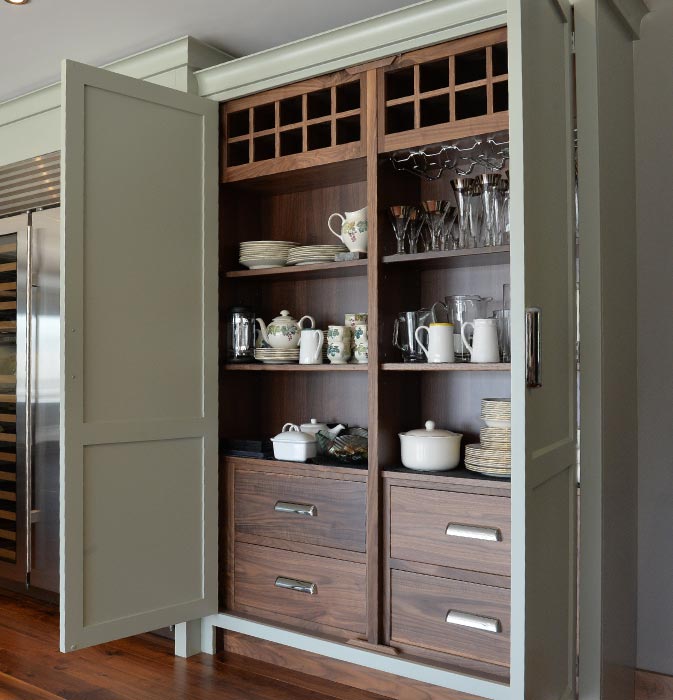
The question of cost in a bespoke English kitchen is most usefully understood not as a comparison of price but as a comparison of what is being purchased. An off-the-shelf kitchen and a bespoke English kitchen are not the same product at different price points. They are fundamentally different objects with different properties, different lifespans and different relationships to the spaces they inhabit.
A bespoke English kitchen, properly made and properly installed, will last several decades and can be restored and refreshed at intervals without replacement. It is designed specifically for its space, which means it uses every inch of that space efficiently and looks as though it belongs there. Its materials age with character, its construction can be repaired, and its design is not subject to the obsolescence that affects manufactured kitchens whose components are no longer available after a few years.
The investment in a bespoke kitchen is also an investment in the value of the property it inhabits. A well-designed, well-made kitchen in a quality home is one of the features that most consistently affects buyer perception and, by extension, sale price.
The Design Process: From Brief to Installation
The process of designing and installing a bespoke English kitchen is one of the most important differentiators between a genuinely bespoke service and a semi-bespoke one. At its best, it is a genuine collaboration between designer and client that begins with a thorough understanding of the space, the brief and the way the kitchen will be used, and develops through a process of drawing, material sampling and iterative refinement before a single piece of timber is cut.
At Karl Benz, our design process begins with a free consultation at our Sheffield showroom, where clients can see and handle materials, discuss their brief in detail, and begin to develop a clear picture of what their kitchen can be. The design develops through detailed drawings and material presentations, and our team manages every aspect of the project through to installation, ensuring that what is designed is what is delivered.
For those who prefer to begin with a visit to the showroom, our space on Napier Street in Sheffield provides a working environment in which a range of finishes, materials and hardware can be seen in context. For clients across Sheffield and Derbyshire, we are happy to arrange a home visit as part of the initial consultation.
Bespoke English Kitchens at Karl Benz, Sheffield
Karl Benz has been designing and installing bespoke kitchens in Sheffield and the Peak District for over a decade, working with some of the most beautiful homes in the region. Our English kitchen collection represents the finest expression of British cabinetry tradition, designed and fitted to a standard that will stand the test of time.
Alongside our English range, we also offer Italian kitchens through our partnership with Doimo Cucine and German kitchens through Systemat and Concept130, for clients whose aesthetic and functional requirements call for a different approach. Our case studies show the range of projects we have completed across Sheffield and Derbyshire, from contemporary open-plan spaces to traditionally styled country kitchens.
If you are considering a bespoke English kitchen and would like to discuss your project, we would be glad to hear from you. Book a free design consultation or call us on 0114 276 9388 to arrange a visit to our Sheffield showroom.
________________________________________________________________________________________________________
Craftsmanship Behind Bespoke English Kitchens – FAQs
What is the difference between a bespoke English kitchen and a made-to-measure kitchen?
A bespoke English kitchen is designed from scratch for a specific space, client and brief. Every dimension, proportion and detail is determined by the project. A made-to-measure kitchen modifies standard unit sizes to fit a space, but the units themselves remain standardised. The distinction matters because a truly bespoke kitchen works with the architecture of a room, using every inch efficiently and looking as though it belongs there, whereas a made-to-measure kitchen is adapted to fit rather than designed to belong.
How long does a bespoke English kitchen last?
A bespoke English kitchen, properly made from solid hardwood using traditional joinery techniques, will last several decades. The construction methods used, mortise and tenon joints, frame and panel doors, properly seasoned timber, produce a structure that is inherently stronger than one held together with modern adhesives alone. Crucially, a well-made bespoke kitchen can be repaired, refinished and refreshed at intervals rather than replaced, which means its lifespan is measured in generations rather than years.
Are hand-painted kitchens worth it?
Yes, for kitchens where longevity and quality of finish matter. A properly hand-painted kitchen door has a depth and variation of surface that factory-sprayed alternatives cannot replicate. The paint is applied in multiple coats, sanded between each, and finished to a standard that allows it to be touched up in place if needed without removing and replacing cabinetry. The finish improves with age as it cures and settles, which is the opposite of what happens with lower-quality spray finishes over time.
Does a bespoke kitchen add value to a property?
Yes. A well-designed, well-made bespoke kitchen is consistently one of the features that most affects buyer perception in a quality home. Unlike a manufactured kitchen whose components become unavailable within a few years, a bespoke kitchen with solid hardwood cabinetry, quality worktops and considered hardware retains its appeal and its condition over time. Estate agents consistently identify the kitchen as one of the two or three rooms that most influence both the sale price and the speed of sale of a property.
