


Materials and Finishes in Bespoke Handmade English Kitchens
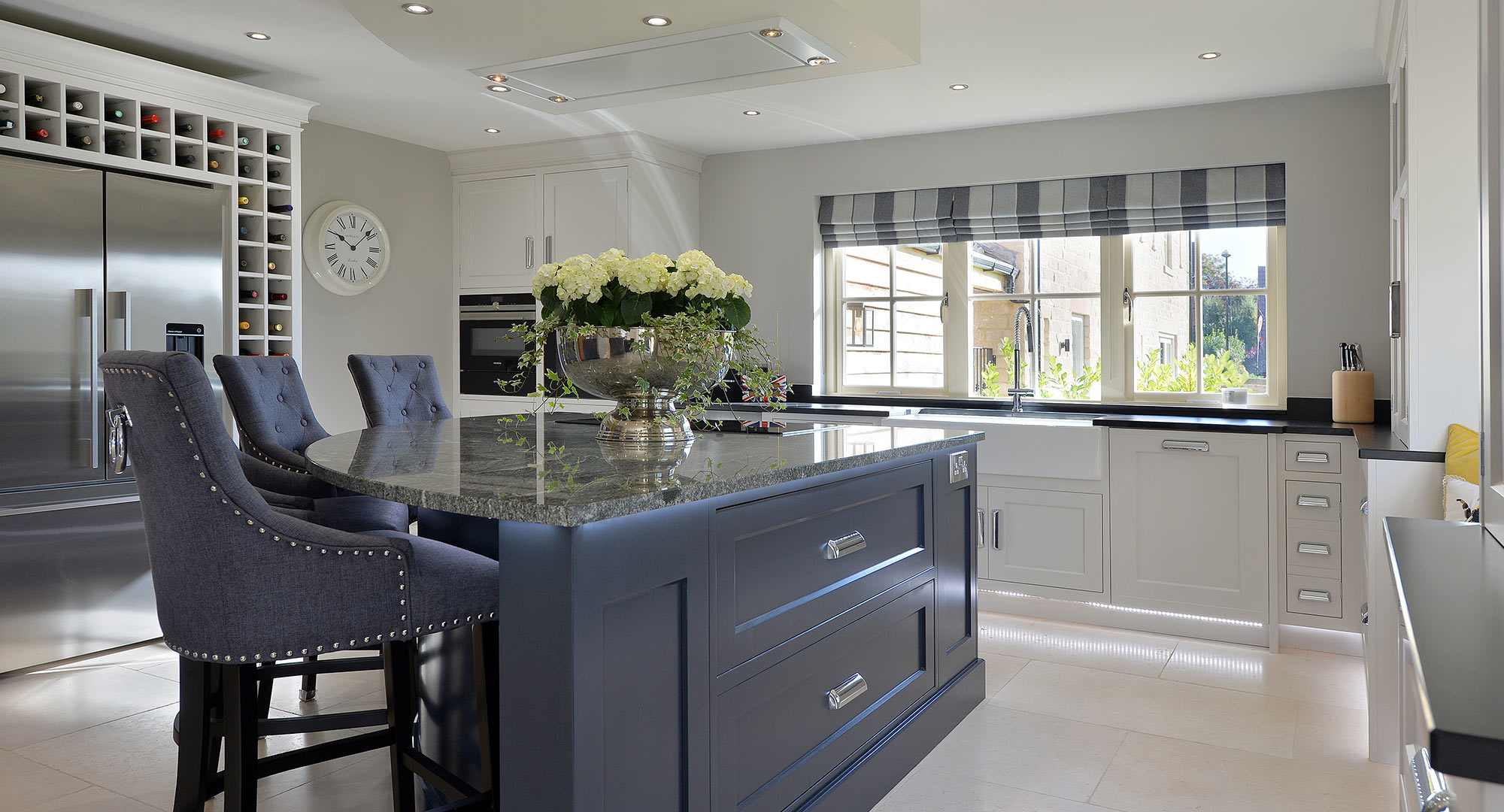
The character of a bespoke English kitchen is determined above all else by the materials from which it is made. The design might establish the proportions and the layout, the craftsmanship might determine how well it is built, but it is the materials and the finishes that determine how a kitchen feels to live with: how it looks at different times of day, how it responds to use and age, and whether it settles into a home as though it has always been there.
Understanding the choices available, and what each material brings to the finished kitchen, is one of the most useful things a prospective client can do before beginning the design process. This guide covers the key material categories in a bespoke English kitchen and what to consider when making choices within each.
Why Material Choice Defines the Character of a Kitchen
A kitchen made from quality materials ages differently from one that is not. Solid hardwood develops a patina with use. Natural stone acquires a warmth and depth that only time produces. Hand-painted finishes settle into their colour as they cure. Aged brass hardware develops a lustre that factory-finished alternatives never achieve. The finest bespoke English kitchens are designed with this ageing process in mind, using materials that improve over time rather than deteriorating.
Material choice also determines the maintenance requirements of a kitchen across its lifetime, and the options available for restoration and repair. A solid hardwood cabinet can be sanded and repainted. A natural stone worktop can be resealed and polished. A kitchen made from quality materials and properly maintained can last for generations. One made from inferior alternatives cannot, regardless of how well it was designed.
The choices made at the material selection stage are among the most consequential in a bespoke kitchen project. At Karl Benz, our designers guide clients through these choices with the knowledge and experience that comes from over a decade of working with the finest materials available.
Solid Hardwood: The Foundation of the English Kitchen
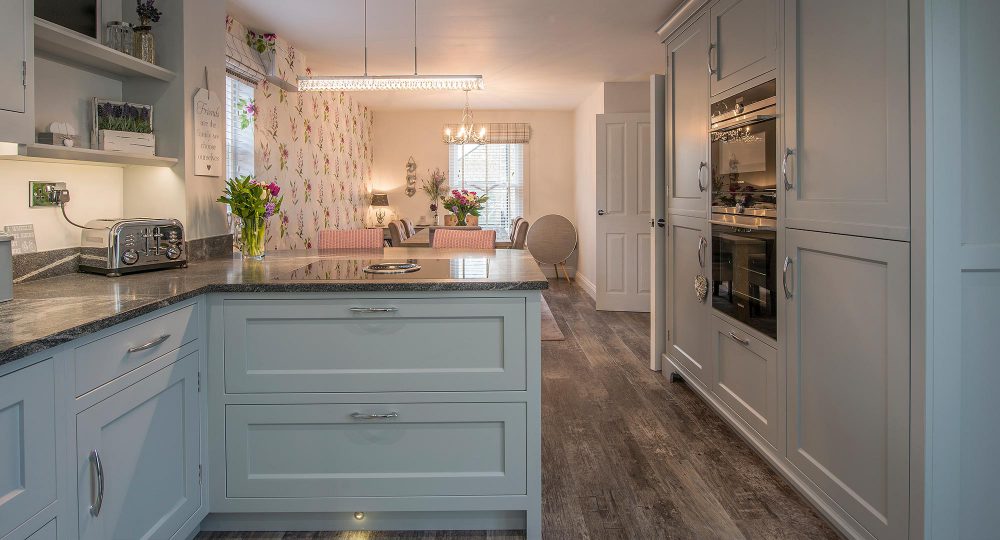
Solid hardwood is the defining material of the bespoke English kitchen, and the one against which all other cabinet materials are measured. Oak, ash, walnut and painted hardwoods each bring a distinct character to a space, and the choice between them is one of the first and most significant material decisions in a project.
Oak is the most traditional choice for an English kitchen, and with good reason. Its pronounced grain, warm tones and exceptional durability make it well suited to the demands of a working kitchen, and it ages with a character that few other materials can match. Lightly oiled or wax-finished, it develops a rich patina with use. Painted, it provides a foundation of exceptional stability and quality.
Ash brings a lighter, more contemporary quality, with a finer and more even grain than oak. It is an increasingly popular choice for kitchens that want the quality and longevity of solid hardwood with a slightly fresher, more modern character.
Walnut is the most characterful of the main hardwood options, with its deep, rich tones and distinctive figure. It is typically used as a natural finish rather than painted, and it suits kitchens where warmth and drama are part of the brief.
Painted hardwoods, usually a close-grained species such as tulipwood or ash, provide the foundation for the hand-painted finish that is one of the most enduring expressions of the English kitchen tradition. The quality of the substrate is as important as the quality of the paint itself, and solid hardwood produces a result that MDF and other alternatives cannot replicate. Where sustainability is a consideration, FSC-certified timber offers a reliable way to verify that hardwood has come from responsibly managed forests.
Painted Finishes: Colour, Depth and the Art of Restraint
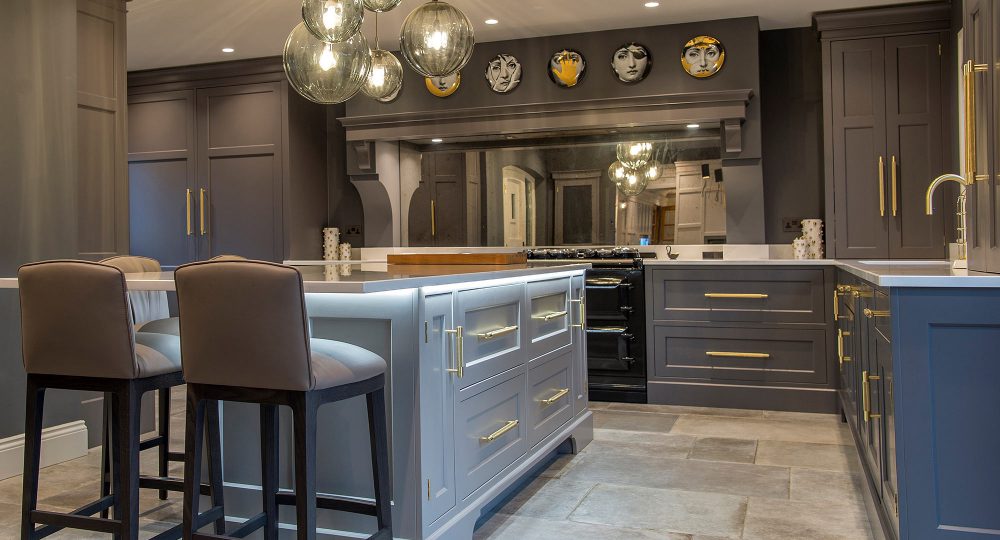
The hand-painted finish is perhaps the single most characteristic element of a bespoke English kitchen, and the one where the quality of the craftsmanship is most immediately visible to the eye. A properly hand-painted kitchen door has a depth and variation of surface that factory-sprayed finishes cannot achieve: a slight quality of irregularity that catches the light differently at different times of day and that reads as genuinely made rather than manufactured.
Colour choice in a bespoke English kitchen is made with an understanding of the specific light conditions of the room, the flooring and worktop materials, and the relationship to adjacent spaces. The palette most closely associated with the English kitchen tradition, soft whites, warm off-whites, muted sage greens, deep blues, dusty pinks and earthy neutrals, reflects a tradition of using colour with confidence and restraint rather than following the movement of trends.
In 2026, earthy tones, warm greens and deep blues continue to lead the English kitchen palette, alongside a renewed interest in creamy whites and warm stone tones that read as quietly timeless rather than fashionably neutral. The best colour choices are the ones that respond specifically to their setting rather than to a broader trend, and they are almost always made in the room rather than from a chart.
The quality of the paint and the preparation beneath it determines how the finish performs over time. Properly prepared and properly painted hardwood, with sufficient coats applied and sanded between each, produces a finish that is beautiful on installation and that continues to improve as it cures and settles. Poorly prepared or rushed paintwork looks adequate on the day and shows its limitations within months.
Worktop Materials: Stone, Timber and What Suits Your Kitchen
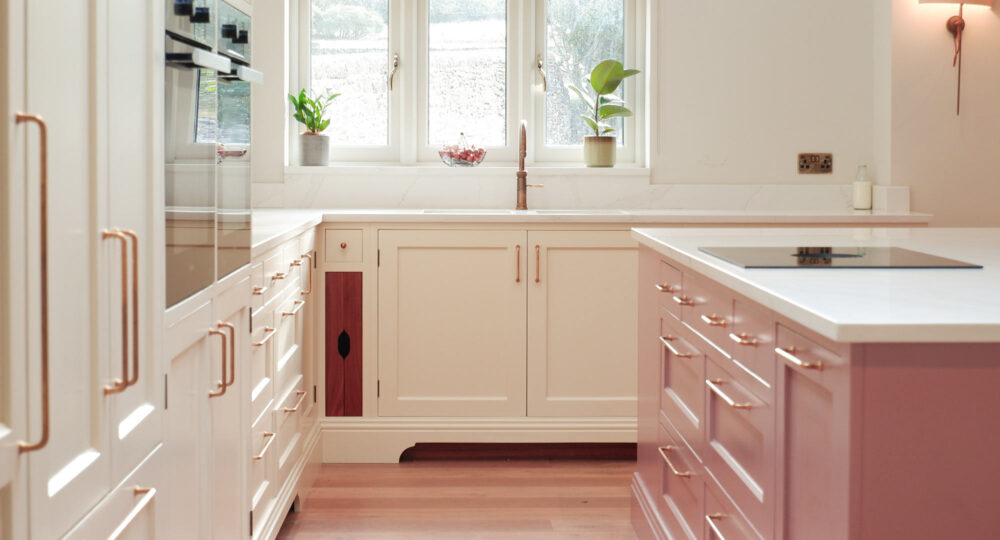
Worktop selection is one of the most practically significant material choices in a bespoke kitchen project, and one where the options are genuinely varied in terms of appearance, durability and maintenance requirements.
Solid timber worktops are the most traditional choice for an English kitchen, and they bring a warmth and tactility to a space that stone and engineered alternatives cannot replicate. Oak, ash and walnut are the most common species, each with different grain character and colour. Timber worktops require regular oiling to maintain their condition and are best suited to kitchens where the worktop will be treated as a working surface rather than a pristine object. They are repairable: surface marks and staining can be sanded out and the surface re-oiled, which means a timber worktop can be restored to condition repeatedly across its lifetime.
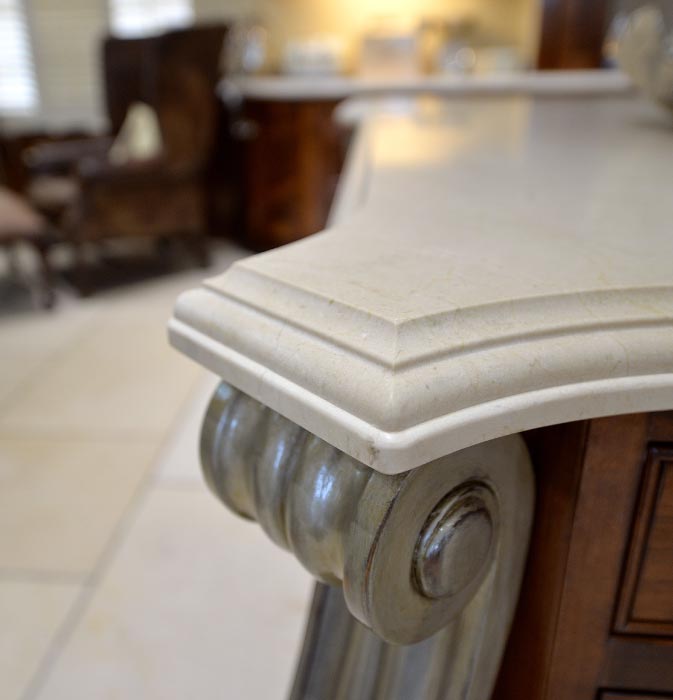
Natural stone, including granite, limestone and slate, offers exceptional durability alongside a visual character that is entirely its own. Each slab is unique, with a pattern of colour and veining that cannot be replicated, and a weight and presence that immediately communicates quality. Stone worktops are heat-resistant and highly durable, though they require sealing and periodic resealing to resist staining, and some stones are more susceptible to marking than others.
Honed marble is among the most beautiful of all worktop materials, with a soft, matte surface and a depth of tone that polished stone does not have. It is also the most demanding in terms of maintenance: marble is susceptible to etching from acidic substances and requires careful treatment. The Natural Stone Institute recommends avoiding acidic cleaning products on calcareous stones such as marble and limestone for exactly this reason. For clients who want the extraordinary beauty of marble and are prepared to accept its maintenance requirements, it produces a result that is genuinely unmatched. For those who are not, an engineered stone that replicates the appearance with considerably more resilience may be a more practical choice.
Natural Stone and Marble: Character That Develops Over Time
The distinction between natural and engineered stone deserves more attention than it typically receives in kitchen discussions. Natural stone, whether granite, marble, limestone or slate, is a material with genuine character: no two slabs are the same, the colour and veining shift across the surface, and the stone develops its own patina with age and use.
Engineered stone is a manufactured product that uses stone particles bonded with resin to produce a consistent, highly durable surface. Its consistency is both its advantage and its limitation: it performs predictably and is easier to maintain than most natural stones, but it lacks the depth and individuality of the real thing. For a kitchen designed to last for decades and to age with character, natural stone is the more considered choice.
For clients considering marble specifically, honed finishes are considerably more practical than polished ones in a kitchen context. The matte surface is less prone to showing etching, more forgiving in use, and more in keeping with the aesthetic of a bespoke English kitchen that is designed to be lived in rather than admired from a distance.
Hardware Finishes: Brass, Bronze and the Details That Last
Hardware is where many bespoke kitchen projects either come together or fall short, and it is consistently one of the areas where clients express the greatest surprise at the difference quality makes in daily use.
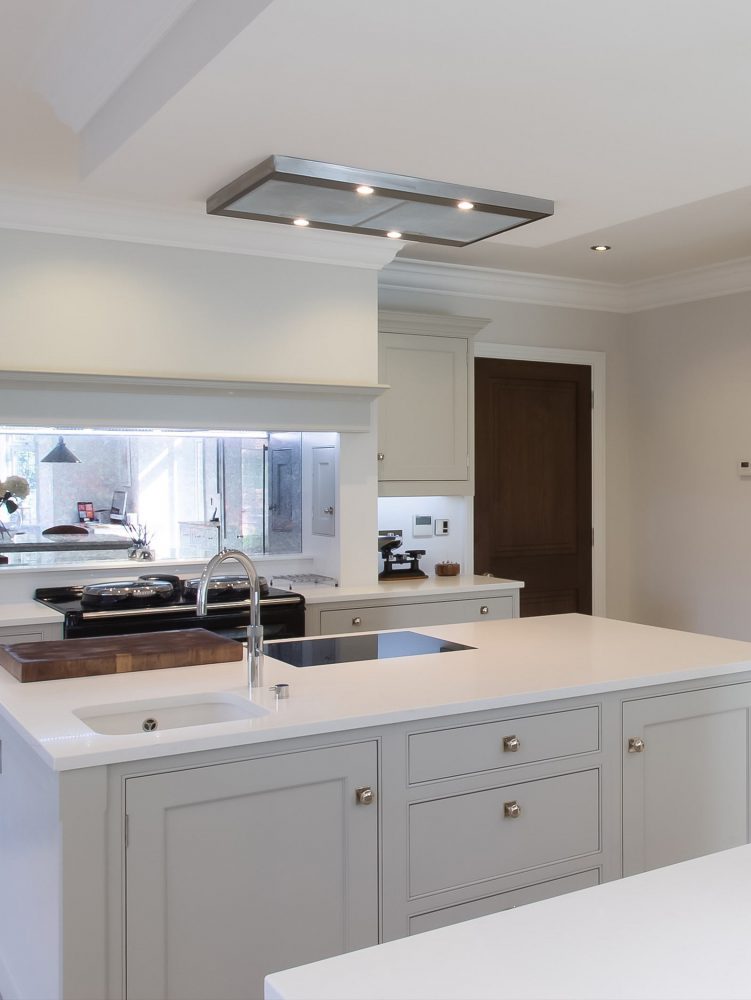
Solid brass is the most traditional hardware material for an English kitchen, and the one with the most rewarding ageing properties. Unlacquered brass develops a warm, uneven patina with handling that adds to rather than detracts from its character, and that looks entirely different from the uniform finish of a newly installed piece. Aged and antique brass finishes, which replicate the appearance of brass that has been handled over time, offer a similar quality without the transitional period.
Bronze brings a darker, richer quality than brass, and suits kitchens where the overall palette is deeper and warmer. Pewter is quieter and more understated, and suits kitchens where a softer metallic presence is preferred. Hand-forged iron has a raw, craft quality that works particularly well in country kitchens and in spaces where the aesthetic is more robust and traditional.
The weight and action of hardware matters as much as its appearance. A well-made hinge opens and closes with a smoothness and precision that an inferior one does not, and the difference is felt every time the door is opened. A solid drawer pull, properly attached to a well-made drawer, has a satisfying resistance that communicates quality in a way that is immediately apparent and difficult to articulate.
Explore Materials at the Karl Benz Sheffield Showroom
The most important thing to understand about material selection in a bespoke kitchen is that it cannot be done effectively from a screen. Colours look different in natural light. Stone has a weight and texture that photographs cannot convey. Hardware needs to be handled to be properly assessed.
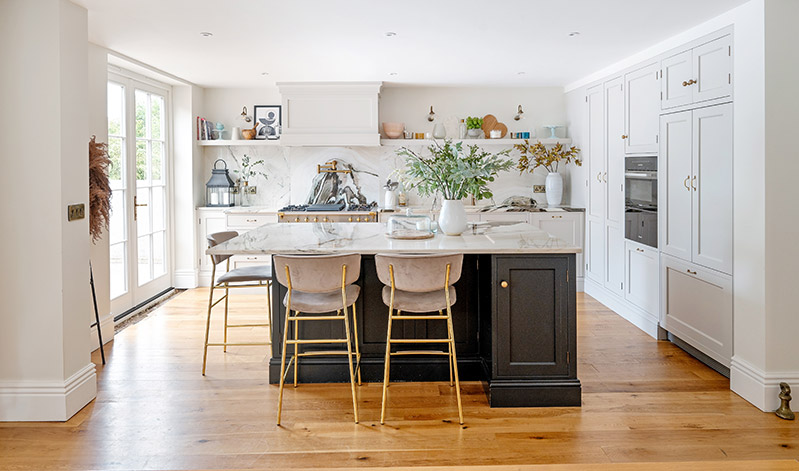
Our Sheffield showroom on Napier Street is designed to allow clients to see and handle materials, finishes and hardware in context, and to develop a clear understanding of what each choice will look and feel like in their home. Our designers are available throughout the visit to answer questions and guide the selection process.
Whether you are drawn to our bespoke English kitchens, the sleek lines of our Italian collection or the precision engineering of our German kitchens, the showroom is the right place to begin. Book a free design consultation or call us on 0114 276 9388 to arrange your visit.
________________________________________________________________________________________________________
Bespoke English Kitchen Materials Finishes – FAQs
What is the best hardwood for a bespoke English kitchen?
Oak is the most traditional choice, valued for its pronounced grain and durability, while ash offers a lighter, more contemporary alternative and walnut suits kitchens where warmth and drama are part of the brief. The right choice depends on whether the wood will be left natural or painted.
Is marble a practical choice for a kitchen worktop?
Marble is one of the most beautiful worktop materials available, but it requires careful maintenance, particularly avoiding acidic substances that can etch the surface. A honed rather than polished finish is more forgiving and better suited to a working kitchen.
What is the difference between natural and engineered stone?
Natural stone is unique to each slab, with variations in colour and veining that develop character over time, while engineered stone is manufactured for consistency and easier maintenance but lacks the individuality of the real material.
What hardware finish suits an English kitchen best?
Solid brass is the most traditional choice and develops an attractive patina with use over time. Bronze suits deeper, warmer colour palettes, while pewter offers a quieter, more understated alternative for those who prefer a softer metallic finish.
